
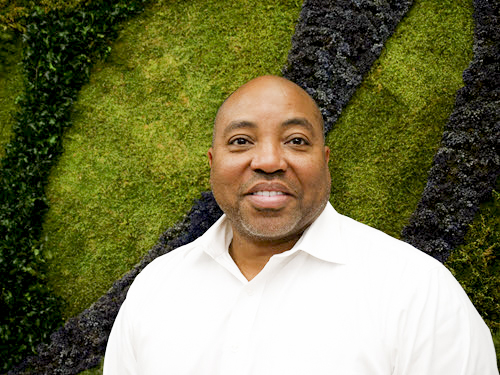
Eddie Darton, M.D., is vice president of Pharmacovigilance & Risk Management at Sarepta. We’re sharing his journey to Sarepta as part of a series exploring the people and stories behind Sarepta’s genetic medicine revolution.
Pharmacovigilance & Risk Management
Hospital emergency departments tend to be fast-paced, sometimes chaotic environments. Providers need to process information quickly, think clearly and act decisively—all while keeping a watchful eye out for subtle or unexpected changes. “In the ER, you need to make split-second decisions. You can’t sit there and ponder all day,” said Eddie Darton, M.D., vice president of Pharmacovigilance & Risk Management at Sarepta.
While Darton works in drug safety now, he began his career as a physician and worked for a time in the emergency department of a Naval hospital. Working in drug safety at a biotech company, where days are mostly spent at a computer pouring over patient data and charts, may seem a far cry from the ER. But the roles have more in common than you would think, according to Darton. That’s because both are about managing risk, mapping a path to the best outcome and always doing what is right for patients.
Bringing an open mind, with a high level of suspicion
After he transitioned from clinical care to working in drug safety, or pharmacovigilance, one of Darton’s biggest challenges was explaining his new role to people. “Everyone knows R&D, but they don’t know us,” he said of his pharmacovigilance colleagues.
Pharmacovigilance is defined as the science and activities relating to the detection, assessment, understanding and prevention of adverse effects or any other medicine/vaccine-related problem.1 More simply: “Our job is to monitor the safety of approved medicines and therapies in development,” Darton explained. “We’re there if you experience an issue with a therapy. And we do everything we can to make sure the participants in a clinical trial are as safe as possible.”
Drug safety professionals like Darton develop the safety protocol for all stages of a clinical trial, identifying the medical and laboratory tests that will monitor patient safety, agreeing with regulatory agencies on how trial data will be collected and clarifying how serious side effects will be expeditiously reported.
To develop a protocol, Darton studies all available data and literature to understand and anticipate safety risks. In rare diseases, where there is a smaller library of patient data (because the number of people affected is smaller and there are fewer participants in clinical trials), Darton must widen his search for safety information. “We look at what’s known from non-clinical studies and animal studies, and we extrapolate things we see in those studies to what we might see in humans,” he explained. “We also look at study data from other therapies in development. And we factor in the day-to-day real-world information we get from ongoing clinical studies. Only then do we have a good picture of safety concerns.”
In this way, Darton’s job is part scientist, part detective, part explorer of the unknown. “Working in genetic medicine, we’re at the leading edge of science and so much of the field is new,” Darton explained. “You have to approach everything with an open mind but high level of suspicion, and then consider every angle.”
We want to make sure we’re keeping patients safe without making the drug trial process more burdensome.
A privilege to take this journey with patients
Patients’ and families’ needs are always at the front of Darton’s mind when designing trial protocol. He’s acutely aware that participating in a trial involves more than just taking part—it can require logistical coordination and time from families, including travel to a study site. Once enrolled, participants will undergo regular safety assessments, along with evaluations to measure if the therapy is working as intended.
“We want to make sure we’re keeping patients safe without making the drug trial process more burdensome with additional trips to the hospital or laboratory for tests and procedures,” he explained.
It’s a balance he takes seriously, ensuring rigorous safety and efficacy monitoring while remaining mindful of the real-world impact on families. “I thank the families for allowing us to work with them on this journey. It’s a tremendous responsibility, but also an honor,” he said. “I want families to know that we’re with them every step of the way. They are never alone.”
References
1. World Health Organization. Pharmacovigilance. (https://www.who.int/teams/regulation-prequalification/regulation-and-safety/pharmacovigilance)
Related Articles
-
-
Advocates & Innovators
Leading with science, grounded in patient impact: Meet James Richardson, M.D.
-
Advocates & Innovators
Roots of innovation: From science fairs to the leading edge of precision genetic medicine