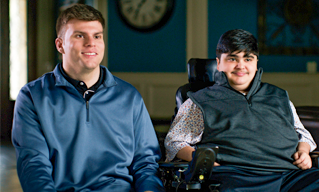

Ten-year-old Nathan Tiran is a soccer fan and math whiz. He loves trivia and travel. He’s curious and adventurous, and his life today looks different from what his parents, Virgil and Elena, imagined in the days immediately following Nathan’s diagnosis with Duchenne muscular dystrophy at age 4.
At that time, they put plans on hold and focused on learning about Duchenne and what treatment might be available for their son. Duchenne is a progressive muscle-wasting disease. It occurs when the body can’t make a protein called dystrophin. Without dystrophin, muscles throughout the body—including the legs, arms, lungs and, eventually, the heart—are irreversibly damaged.
While there is currently no cure for Duchenne, disease-modifying therapies are available. These treatments aim to address the underlying cause of the disease by restoring dystrophin. In Duchenne, muscle lost cannot be regained, so timing of treatment is critical.
“Time is of the essence,” Virgil said. “You need to buy time, and it’s possible.”
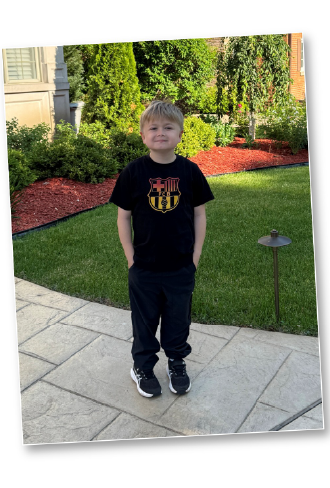


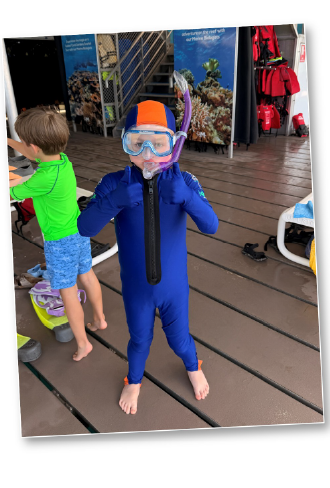
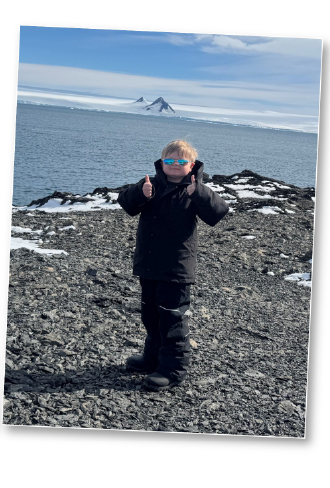
In 2023, at age 7, Nathan was treated with a Sarepta therapy at Lurie Children’s Hospital in Chicago. Now, three years later, his parents believe that the disease-modifying treatment is part of what allows Nathan to keep pace with his curiosity. Whether it’s learning about new places and cultures, or experiencing the world in hands-on ways—like hiking on a glacier, braving a coldwater plunge or meeting animals he’s only read about—Nathan’s all in.
On their family adventures, there are some days when Nathan hits 10,000 steps, according to Virgil. “If you told me five years ago this would be our reality, I would have told you that you were naïve,” he said. “When we first got his diagnosis, our hope was to keep him on his feet for a few years. Now, we want him to learn to drive. Now, I expect him to go to college, get a job. And I hope he will get married.”
“I knew deep in my soul”
Nathan was diagnosed in 2020, but Elena sensed something wasn’t quite right long before they received official confirmation from his healthcare provider. Some early milestones, like crawling and walking, came later than expected. And when Nathan fell, it wasn’t the typical stumble—he would go straight down, without using his arms to catch himself. Elena raised these concerns with Nathan’s pediatrician multiple times but was reassured that children develop at different rates and advised to “give it time.”
Elena at first listened to the reassurance, but when she saw Nathan working to jump on a trampoline while other kids bounced with ease, “I knew down in my soul that something’s not right,” she recalled.
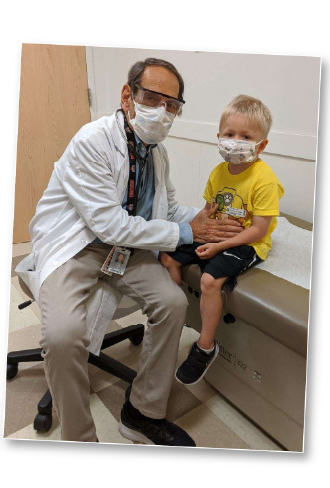
A new pediatrician took Elena’s concerns seriously and referred Nathan to physical therapy. The therapist quickly noticed signs that suggested something more than a routine delay, and Nathan’s doctor ordered a blood test. He explained they needed to check Nathan’s creatine kinase, or CK, levels—a protein in the blood that can rise when muscles are damaged—without going into detail. “He didn’t want to scare me,” Elena said. At home, she looked it up. When she learned that high CK levels could signal a serious muscle condition, she froze. “That’s when I started crying. I thought, ‘this is it.’”
The results were confirmed after the weekend: Nathan’s CK levels were abnormally high. He was referred to a neurologist for further testing and the Duchenne diagnosis came soon after.
Every day matters
As they met with neuromuscular specialists and learned more about Duchenne, Virgil and Elena came to understand the urgency of treating a disease that steadily progresses over time. In Duchenne, waiting can mean additional, permanent muscle damage and loss of function.
“The goal is to slow the deterioration of the muscles,” Virgil explained. “If you can do that, you can help maintain quality of life.”
While the diagnosis was devastating, Virgil and Elena were grateful that Nathan had access to expert care teams and treatment options designed to address the underlying cause of the disease, rather than just treating symptoms. That access shaped how they thought about the future—not in terms of limits, but in terms of preserving what Nathan can do today.
“Maybe he’s not going to play soccer or football,” Elena said. “But when we travel, Nathan is walking and leading the way. His confidence comes from being able to do that. So we focus on being present and living in the moment with him.”
Moving forward
Six years into life with Duchenne, and three years after Nathan received treatment, Virgil has a clear message for other families: “Don’t give up,” he said. “And don’t let the diagnosis define your family.”
For the Tirans, that philosophy has shown up through travel, sometimes close to home, sometimes farther away. Over the years, their trips have ranged from everyday outings to once-in-a-lifetime experiences, including Antarctica and the Great Barrier Reef. But Virgil is quick to emphasize that the destination isn’t what matters.
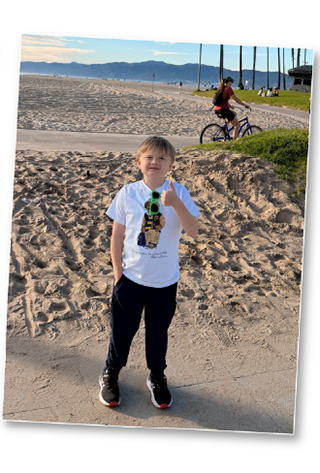
“It doesn’t have to be a big trip,” he said. “It could be a walk in the park. What matters is continuing to move forward and not putting your life on hold.”