
For families navigating Duchenne muscular dystrophy treatment, having clear information—and someone to talk things through with—can really matter.
Sarepta’s Duchenne Nurse Educators are registered nurses who work closely with healthcare providers, patients and caregivers to help families understand Duchenne treatment and infusion experiences, offering education and support in both English and Spanish.
Families often look to nurses when they need a trusted person to talk with, ask questions or think through what comes next. Working together with our dedicated team of Case Managers, Sarepta’s Duchenne Nurse Educators connect with every patient receiving a Sarepta therapy, listening and helping families prepare for conversations with their care team so those discussions feel clearer and less overwhelming.
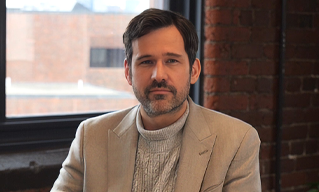
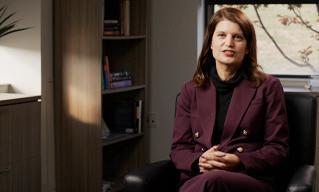
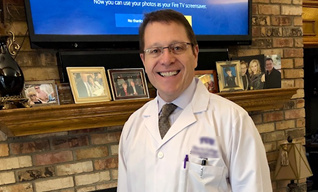
In this short video, we introduce a few members of our Duchenne Nurse Educator team as they share why they chose nursing, how they work with families and healthcare providers, and why education and connection are such an important part of Duchenne care. You’ll hear, in their own words, what motivates their work and what it means to support families facing complex decisions.
Watch the video. Read the video transcript below.
Video transcript
Wendy Levan, RN, CPN, Duchenne Nurse Educator: The goal of a nurse is to get you to be able to open up and trust us so that we can help you. It's all about building that rapport, so I kind of gauge each family differently. We let them know that that's a safe space. Every question is a great question and that will help them get through, whether I can answer it or whether I direct them back to their doctor. I'm here for whatever they need, and if I don't have the answer, I'll find the answer for them.
Tonya Johnson-Gilliam, MSN, APRN, FNP-C, Duchenne Nurse Educator: Sometimes it's not always what people say. It's what they don't say. And I feel like that if you're able to tap into that, that is how you start to build a trusting relationship, which is why I believe a lot of patients feel so comfortable talking to nurses. We built that relationship, we built that trust. It's genuine, it's transparent.
Tom Spicuzza, RN, MSN, CNL, Duchenne Nurse Educator: We're so connected with that patient and we're ushering through a very difficult time, a very trying time. You're dealing with a lot of anxiety, a lot of worry. You’ve got to be calm. You've got to be able to weather the storm and you have to be there to hold their hand and to be that person that they can rely on. That is not an easy thing to do, and you got to really have that bedside manner.
Dawn Scott, BSN, RN, Duchenne Nurse Educator: I feel families need somebody to listen to them. Even though it might be something I'm used to hearing about or their provider is used to hearing about, this is new for them. So I think the most important thing is just for them to have somebody to listen to their worries and concerns. So I just let them know, you know, just take this a step at a time. You're doing everything you can for your child.
Mary Powell, BSN, RN, Duchenne Nurse Educator: When I call a patient or a family member, I want to hear about their journey. We're here to know them individually. I love when families give me their trust. I love to answer questions, I love to educate. I love to be there for the patients. That's why I became a nurse.
Related Articles
-
Advocates & Innovators
Leading with science, grounded in patient impact: Meet James Richardson, M.D.
-
Advocates & Innovators
Roots of innovation: From science fairs to the leading edge of precision genetic medicine
-
Advocates & Innovators
Navy veteran, lifelong learner, dedicated Duchenne Nurse Educator: Meet John Crane