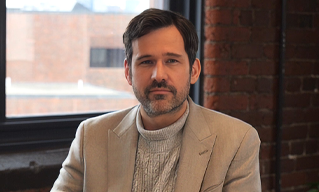

As the rare disease community marks 10 years since the first U.S. FDA-approved therapy for Duchenne muscular dystrophy, Diane Berry, PhD, Sarepta's Chief Global Policy and Advocacy Officer, reflects on the scientific, regulatory and patient-driven efforts that helped shape progress in the field.
and Advocacy Officer
When I first came to Sarepta 15 years ago, there were no approved treatments for Duchenne other than steroids to manage symptoms. The landscape for families was, in many ways, a desert.
But it was also a time of hope. Thanks to advances in genetic research, we understood the underlying cause of Duchenne, and you can't say that about a lot of rare diseases. Science gave us reason to believe that treating the disease at its root and changing its course was possible.
As we mark 10 years since the first therapy for Duchenne was approved by the U.S. FDA, it’s important to consider both how far the field has come and what it took to get here. The path was not always straightforward, and progress in rare disease is rarely perfect. We move forward with the knowledge we have at the time, learn from it and continue building as the evidence grows.
Solving for something hard, without a roadmap
In advancing breakthrough therapies for Duchenne, we were trying to do something that had never been done before. There were no validated clinical endpoints or biomarkers. We were asking difficult scientific questions and challenging convention. We were trying to solve for something hard, without a roadmap to do so.
Controversy was inevitable. We were questioning whether approaches used in more common diseases made sense in Duchenne. The scientific debate that ensued deepened our understanding of the disease and how to evaluate potential therapies.
It also informed broader discussion about regulatory standards and evidence generation. Accelerated approval was a scientifically grounded path forward. But bringing that pathway to Duchenne required years of purposeful education and collaboration, dialogue that began well in advance of the very first approval. FDA had never before evaluated a Duchenne therapy or the surrogate endpoints used to assess it; and regulators, industry and the community were working together to understand what meaningful evidence could look like in a rare, slowly progressive and heterogeneous disease.
The challenge was not only generating evidence but also determining how benefit should be measured in a progressive disease whose destruction takes place over decades, not in a one- or two-year timeframe typical of a clinical trial. To this day, treatment expectations are often framed around improvement, as if years of permanent muscle loss could simply be undone. From the outset, our goal, consistent with the realities of Duchenne, was to slow or stabilize the disease at whatever stage a patient was at and prevent further decline for as long as possible. The science supported that possibility, and that belief kept us moving forward.
Asking the right scientific questions
Duchenne taught us that drug development for rare diseases cannot be approached like common diseases. When patient populations are small and disease progression occurs over years and can vary from one patient to the next, the tools and approaches used in larger diseases may not be sufficient. Critics claim that means lower standards. In reality, it means asking the right scientific questions and using the methods best suited to provide the evidence to answer them.
A single endpoint at a single point in time may not tell the full story in a slowly progressing disease. A p-value was never intended to be a substitute for scientific reasoning. Regulators increasingly consider all available evidence when assessing a treatment’s impact. And rightly so. Sometimes it takes real-world experience to measure what a time-limited trial can’t: whether, over years of follow-up, patients are defying the well-known trajectory of a progressive disease, with meaningful implications for how they live, function and participate in everyday life.
In Duchenne, the patient community was our guide. By sharing their experiences, they helped regulators, researchers, clinicians and industry better understand the disease and work toward answers.
We have to consider the totality of the evidence and the realities of each unique disease.
No one understands those realities better than the people living with rare disease. In Duchenne, the patient community was our guide. By sharing their experiences, they helped regulators, researchers, clinicians and industry better understand the disease and work toward answers.
Lessons extending far beyond Duchenne
Today, the Duchenne landscape looks very different than it did a decade ago. Families who once had no approved treatment options now have choices; researchers know far more about the disease than they did a decade ago; and the field continues to build on that knowledge. There is still much work to do, but the conversation about what may be possible for patients and families has changed significantly.
As I look back on this milestone, I hope the progress made in Duchenne shows what is possible when science, patients, researchers and regulators work together to solve difficult problems. Those lessons reach far beyond the Duchenne community.
Hear directly from people living with Duchenne and others connected to the community as they reflect on a decade of change. Marking 10 years since the U.S. FDA approval of the first therapy specifically for Duchenne, these personal stories offer perspectives on how care and possibilities have evolved over time.
Related Articles
-
-
-
Advocates & Innovators
Leading with science, grounded in patient impact: Meet James Richardson, M.D.